
Securing a consistent power supply in regions with unstable electrical grids often requires more than just a basic backup; it demands a precision-engineered energy solution. For industrial operators and data center managers, finding a reliable generator perkins 100 kva Supplier involves evaluating the balance between immediate power availability and long-term operational stability. The challenge lies in selecting a system that can handle transient loads without voltage drops, ensuring that mission-critical hardware remains protected from catastrophic failure.
The significance of this choice becomes apparent when considering the intersection of Industrial Diesel Generator Sets and specialized needs like high-voltage requirements or silent operation. A 100 kVA rating typically serves as a critical threshold for medium-sized enterprises, bridging the gap between portable solutions and massive utility-scale plants. When integrated with genuine Perkins engines, these systems provide a specific standard of fuel economy and torque that directly impacts the total cost of ownership and the reliability of the entire energy infrastructure.
To navigate the complexities of sourcing, it is essential to analyze the technical synergy between engine performance and alternator efficiency. This guide explores the critical parameters for evaluating a generator perkins 100 kva Supplier, moving beyond surface-level specifications to examine how modular design and intelligent control systems ensure zero-downtime operations in the most punishing commercial environments.


The fundamental strength of a 100 kVA system lies in the integration of a high-torque Perkins prime mover with a high-efficiency alternator, such as those from Stamford or Leroy Somer. This pairing ensures that the generator can manage sudden "step loads"—the spike in current that occurs when heavy machinery starts—without experiencing a significant drop in frequency or voltage. The engine's electronic governing system precisely regulates fuel injection to maintain a steady RPM, which is vital for protecting sensitive electronics in data centers and hospitals.
Beyond the engine, the structural integrity of the unit is defined by its enclosure and cooling system. For those requiring Silent Diesel Generator Sets, the architecture incorporates acoustic foam and vibration-damping mounts that isolate the noise of the combustion process from the external environment. This allows the units to be installed in urban settings or near residential areas while complying with strict noise pollution regulations, all without compromising the airflow necessary for thermal management.
Maintaining stable power output depends heavily on the quality of the Automatic Transfer Switch (ATS) and the control panel. Using microprocessor-based systems like Deep Sea (DSE) or ComAp allows for real-time monitoring of phase imbalances and frequency deviations. When a grid failure occurs, the speed of the transition—known as the "transfer time"—determines whether backup systems can engage before server clusters reboot or industrial processes are interrupted.
Reliability is not just about the engine; it is about environmental adaptability. High-duty cyclonic air filtration and oversized radiators are mandatory for units operating in abrasive sandstorm conditions or extreme ambient temperatures, as they prevent thermal throttling and engine wear.
Furthermore, fuel system efficiency plays a dual role in stability and cost. Digital injection systems optimize the fuel burn curve, reducing the likelihood of "wet stacking" during low-load operation. This ensures that the generator remains ready for full-load deployment at any moment, providing a consistent ROI for operators who need a balance between standby readiness and operational efficiency.
In environments where power loss equals financial catastrophe, the value of a Perkins-powered set is measured by its Mean Time Between Failures (MTBF). By utilizing standardized, modular components, these generators simplify the maintenance cycle and reduce the Mean Time To Repair (MTTR). This modularity means that critical parts can be replaced without decommissioning the entire power station, maintaining a level of resilience that is essential for 24/7 operations.
The true value of a 100 kVA system emerges during parallel operation, where multiple units synchronize to share the load. This intelligent load-sharing minimizes fuel consumption by running only the necessary number of units for the current demand, directly lowering OPEX.
Moreover, for coastal or high-humidity regions, the use of anti-corrosive galvanized steel enclosures prevents structural degradation. This extends the operational lifecycle of the equipment, ensuring that the initial capital investment is protected over a decade or more of service in harsh climates.
Analyzing performance requires looking at how efficiency fluctuates between 25%, 50%, 75%, and 100% load. Most diesel generators experience a drop in efficiency at very low loads, but high-quality units are engineered to maintain a stable voltage output even when the demand is minimal. This is particularly important for facilities that have varying energy needs throughout the day.
The following data represents the relative fuel efficiency and voltage stability of a standard Perkins 100 kVA configuration compared to generic industrial alternatives across different load percentages, highlighting the consistency of the Perkins platform.
The versatility of these units allows them to be adapted for diverse global needs. In Africa's data center hubs, the focus is on "Silent Containerized Power Stations" that integrate fuel tanks and cooling into a single, acoustically engineered shell. This provides a plug-and-play solution that bypasses the need for extensive on-site construction while adhering to urban noise ordinances.
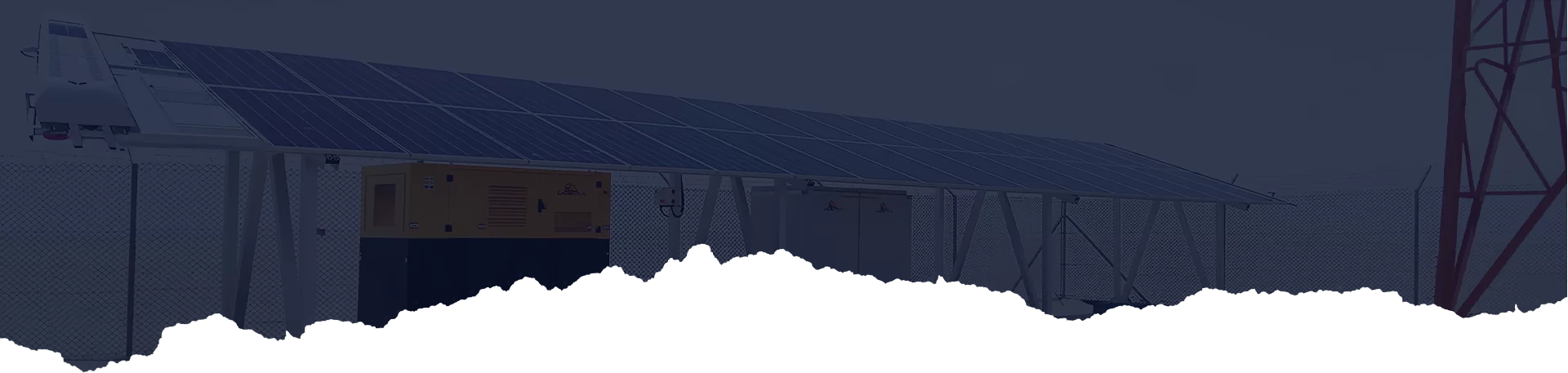
Conversely, in Southeast Asian island resorts, these generators often serve as the backbone of a hybrid microgrid. By operating in synchronization with solar PV arrays, the diesel generator only engages during peak loads or low-solar yield periods. This hybrid topology drastically reduces diesel logistics costs and lowers the carbon footprint of remote luxury hospitality services.
The shift toward Industry 4.0 is bringing remote telemetry and predictive maintenance to the forefront of power generation. Future systems are moving away from reactive repair and toward AI-driven diagnostics. By monitoring vibration patterns and exhaust temperatures in real-time, O&M personnel can identify a failing component before it causes a system shutdown.
Another significant trend is the integration of SCADA (Supervisory Control and Data Acquisition) systems. This allows a single central operator to manage a fleet of generators spread across multiple geographic locations. Remote start, stop, and load-testing capabilities are becoming standard, reducing the need for physical site visits and lowering overall maintenance costs.
Finally, there is an increasing demand for emission compliance. New electronic governing systems are being designed to meet stricter regional standards without sacrificing power density, ensuring that industrial growth does not come at the cost of environmental sustainability.
Integrating a new generator into an existing facility often reveals challenges related to phase matching and harmonic distortion. If the generator's output is not perfectly synchronized with the existing load, it can cause electrical "noise" that damages sensitive server equipment. The solution is the implementation of high-precision automatic voltage regulators (AVR).
Another common issue is the "under-loading" of large generators, which leads to carbon buildup in the cylinders. To solve this, engineers recommend periodic load-bank testing or the use of an intelligent control system that automatically alternates between multiple units in a parallel setup to ensure each engine reaches its optimal operating temperature.
Lastly, logistical constraints in remote areas often complicate fuel delivery and storage. Implementing integrated, double-walled structural fuel tanks reduces the risk of leakage and ensures a sufficient reserve for extended outages without requiring separate, bulky storage installations.
| Environment | Key Requirement | Recommended Feature | Primary Risk |
|---|---|---|---|
| Urban Data Center | Zero Noise/Downtime | Silent Canopy + ATS | Noise Violation |
| Desert Site | Heat Dissipation | Oversized Radiators | Thermal Trip |
| Coastal Resort | Corrosion Resistance | Galvanized Enclosure | Structural Rust |
| Remote Mining | Heavy Load Stability | Parallel Synchronizing | Voltage Drop |
| Agriculture | Low Maintenance | Simplified Architecture | Operational Error |
| Healthcare | Instant Response | Microprocessor Control | Power Lag |
A 100 kVA unit is ideal for medium-scale commercial operations such as small data centers, medical clinics, and industrial workshops. It provides sufficient power for critical HVAC systems, server racks, and essential lighting, filling the gap between small portable units and heavy-industry power plants. Its efficiency is highest when used as a standby source for facilities with a consistent 70-80% load profile.
Silent generators are housed in an acoustically engineered canopy featuring sound-attenuating foam and vibration-isolation mounts. This reduces the decibel level significantly, allowing the unit to be placed closer to office spaces or residential zones. While the internal engine is the same as a standard set, the enclosure manages airflow more carefully to maintain cooling while trapping sound waves.
Prioritize suppliers who offer genuine engine integration and comprehensive after-sales support. Look for CE certification and ISO 9001 compliance to ensure manufacturing quality. A reputable supplier should provide detailed technical datasheets, a clear lead time for bulk B2B orders, and evidence of successful deployments in environments similar to your own, such as remote construction or critical healthcare.
Yes, when equipped with synchronizing control panels like DSE or ComAp, multiple units can be linked in parallel. This allows them to share the total electrical load, increasing total capacity and providing redundancy. If one unit requires maintenance, the others can compensate, ensuring the facility never loses power. This setup also improves fuel efficiency by optimizing the load per engine.
Standard maintenance intervals typically occur every 250 to 500 operating hours, focusing on oil and filter changes and coolant checks. However, for standby units, monthly "no-load" tests and annual "full-load" tests are recommended to prevent wet stacking and ensure the batteries are healthy. Using an OEM supplier ensures that genuine parts are available to maintain the engine's original performance curve.
Standard configurations can typically be finalized within 7-15 days. However, customized ODM projects—such as specialized containerization, unique voltage requirements, or advanced SCADA integration—usually require 20-30 days for production. Shipping timelines vary by destination, generally ranging from 20 to 60 days via ocean freight, depending on the port of entry.
Selecting a generator perkins 100 kva Supplier is a strategic decision that impacts the long-term resilience of any industrial or commercial operation. By focusing on the synergy between a high-torque Perkins engine and an intelligent control system, businesses can ensure a stable power supply that survives the most extreme environmental conditions. The shift toward silent, modular, and parallel-capable systems allows for a level of scalability that evolves alongside the growth of the enterprise.
For those seeking an engineered power solution that balances fuel economy with absolute reliability, expert consultation is the first step toward a secure energy future. To explore detailed technical specifications or request a professional quote tailored to your specific load requirements, you are invited to visit www.jskaichenpower.com and connect with our technical team.

CONTACT US


