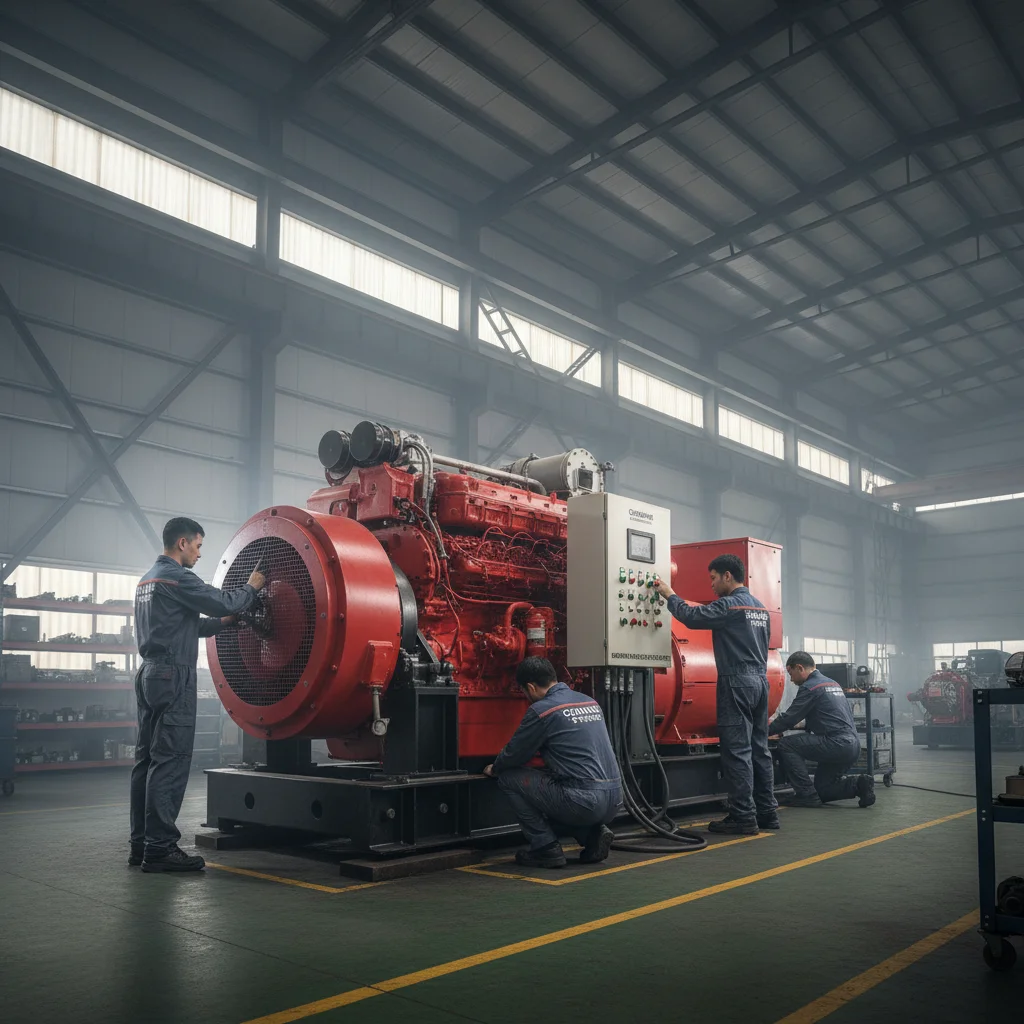

Selecting a reliable yuchai generator Supplier is often the deciding factor between seamless operational continuity and costly industrial downtime. In sectors where power stability is non-negotiable, the procurement process must move beyond simple price comparisons to evaluate the integration of engine reliability, environmental adaptability, and long-term serviceability.
For B2B procurement officers and engineering teams, the challenge lies in matching the specific technical output of a diesel genset with the harsh realities of the installation site—whether that be the humid coastlines of Southeast Asia or the arid deserts of the Middle East. A supplier is not merely a vendor of hardware but a partner in energy resilience.
This guide analyzes the critical dimensions of evaluating a power generation partner, focusing on the technical requirements of industrial diesel sets and the operational advantages provided by experienced manufacturers like Jiangsu Kaichen Power Equipment Co., Ltd.

Defining the Role of a Specialized Generator Supplier

A professional yuchai generator Supplier does more than distribute engines; they architect complete power solutions. In the context of the electrical machinery and equipment industry, this involves the precise synchronization of the diesel engine, the alternator, and the control system to meet specific load profiles.
The complexity of modern power needs—ranging from High Voltage Diesel Generator Sets for municipal grids to Portable Diesel Generators for remote sites—requires a supplier capable of both OEM and ODM services. This flexibility allows for customized modifications in cooling systems, fuel tank capacities, and sound-attenuation canopies.
Ultimately, the supplier's value is measured by their ability to mitigate risk. By providing CE certification and adhering to international emission standards, a reputable manufacturer ensures that the equipment is not only functional but legally compliant in diverse global jurisdictions.
Core Technical Benchmarks for Industrial Diesel Sets
Technical excellence in diesel generators is defined by the balance of fuel economy, power density, and durability. For industrial-grade sets, the focus shifts toward "prime power" capabilities, where the unit can handle variable loads for extended periods without significant degradation in performance.
Key indicators include the efficiency of the fuel injection system and the robustness of the cooling architecture. In high-temperature environments, advanced radiators and high-capacity fans are essential to prevent thermal derating, which can otherwise lead to unexpected shutdowns.
Furthermore, the integration of Silent Diesel Generator Sets has become a priority for urban installations. This requires precision engineering of the acoustic enclosure to reduce decibel levels without compromising the airflow necessary for engine combustion and cooling.
Strategic Application Scenarios Across Global Industries
The deployment of power systems varies drastically depending on the criticality of the load. In data centers, for instance, generators serve as the "last line of defense," where the transition from grid failure to full power must occur within seconds to prevent data loss.
In contrast, construction sites in remote desert regions utilize heavy-duty anti-dust generator sets as their primary power source. These units require specialized air filtration systems to prevent silica and sand from entering the combustion chamber, ensuring longevity in abrasive environments.
Agricultural and aquaculture sectors rely on economical, high-durability sets for irrigation and oxygenation. Here, the priority is low lifecycle cost and ease of maintenance, as these units often operate in isolated areas with limited access to specialized technicians.
Analyzing Operational Efficiency and Performance Metrics
Evaluating the performance of a generator requires looking at the Total Cost of Ownership (TCO) rather than just the initial purchase price. This includes fuel consumption rates at 50%, 75%, and 100% load, as well as the intervals between scheduled maintenance.
When comparing standard industry benchmarks against optimized solutions, the difference is most evident in fuel efficiency and start-up reliability. Optimized units utilize advanced digital controllers to maintain precise voltage and frequency regulation.
yuchai generator Supplier Performance Metrics
As shown in the data, the integration of intelligent control systems and premium alternators significantly boosts the reliability of power transitions and reduces fuel waste during idling periods, leading to a higher return on investment for bulk B2B buyers.
Procurement Framework for High-Capacity Power Systems
For professional buyers, the procurement process should begin with a comprehensive load analysis. Miscalculating the required kVA can lead to either under-powering (causing engine strain and failure) or over-powering (leading to "wet stacking" and inefficient fuel use).
Procurement teams must verify the supplier's ability to provide after-sales support, including the availability of spare parts and the presence of a technical service network. A "factory-direct" model from a manufacturer like Jiangsu Kaichen often reduces lead times and eliminates middleman markup.
Additionally, ensure the request for quotation (RFQ) includes specific requirements for the AMF (Automatic Mains Failure) panel, fuel tank autonomy (how many hours the unit can run without refueling), and the specific emission tier required for the target region.
Evolution of Intelligent Control in Power Generation
The shift toward "Smart Power" is redefining how diesel generators are managed. Modern units now feature integrated digital panels that allow for real-time diagnostics of voltage, frequency, and fluid levels, reducing the need for manual inspections.
Remote monitoring systems are becoming a standard requirement for critical backup power. This allows technical teams to track the operational status of a generator in a different country or city, enabling predictive maintenance before a component failure occurs.
Furthermore, the trend toward hybrid energy systems is growing. By integrating diesel generators with solar photovoltaic arrays, operators can use the generator as a robust backbone for peak loads, significantly lowering the overall carbon footprint and diesel logistics costs.
Decision Matrix for Generator Set Selection
Choosing the right equipment requires matching the product category to the operational environment. While a household generator focuses on ease of use, an industrial set focuses on continuous duty cycles and high voltage stability.
The following matrix provides a comparative overview of different solution types to assist in the final selection process based on specific deployment needs.
| Solution Type | Primary Use Case | Critical Requirement | Maintenance Level |
|---|---|---|---|
| Industrial Diesel Set | Manufacturing Plants | High Load Stability | Scheduled/Professional |
| Silent Diesel Set | Urban Hospitals | Noise Attenuation | Standard/Periodic |
| High Voltage Set | Municipal Grid Backup | Voltage Regulation | High/Specialized |
| Portable Generator | Emergency Field Work | Rapid Deployment | Low/User-led |
| Custom ODM Set | Remote Data Centers | Environmental Adaptability | Predictive/Remote |
| Household Generator | Residential Backup | Ease of Operation | Minimal/Basic |
By aligning the specific operational constraints—such as noise regulations or dust levels—with the appropriate product category, companies can maximize their ROI and ensure long-term energy security.
Frequently Asked Questions
Conclusion
Securing a resilient power infrastructure is a strategic investment in operational safety. By moving beyond a price-centric procurement model and focusing on technical compatibility, environmental adaptability, and the supplier's long-term support capabilities, businesses can ensure their critical systems remain online regardless of grid instability.
Whether you are managing a remote construction site or a high-tech data center, the right power solution is the foundation of your productivity. For those evaluating specific configurations or seeking factory-direct customization, the professional resources and product catalog available through www.jskaichenpower.com provide a comprehensive starting point for securing industrial-grade energy resilience.