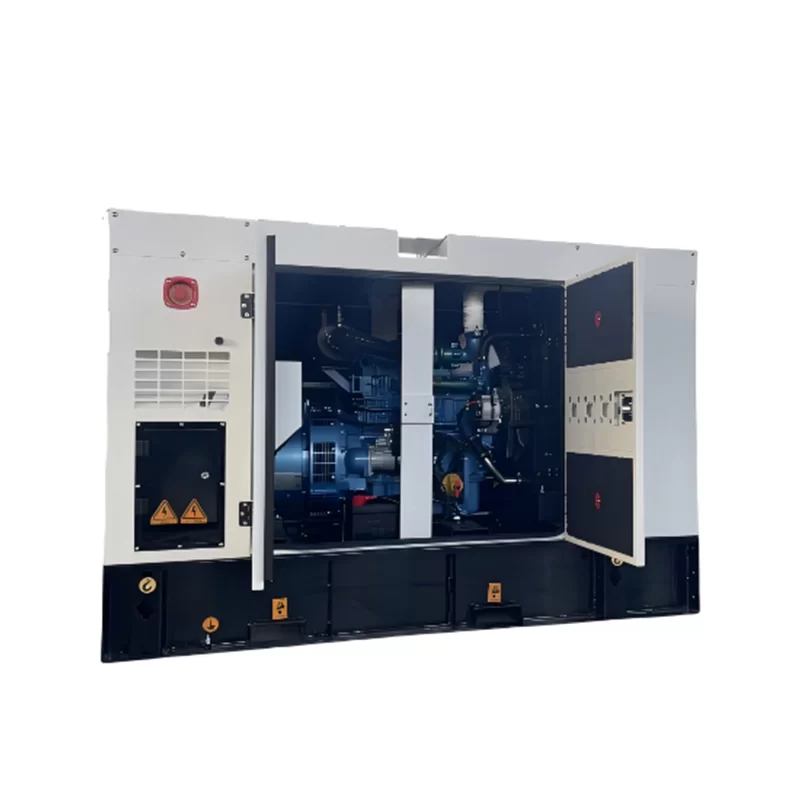

Securing a consistent power supply in remote or mission-critical environments requires more than just hardware; it requires an engineered solution that balances mobility with industrial-grade output. For operations requiring a stable 30kVA capacity, the integration of high-efficiency diesel engines with portable frameworks allows for rapid deployment across construction sites, emergency healthcare facilities, and off-grid industrial zones. Whether providing standby power for sensitive electronics or prime energy for heavy machinery, the focus remains on fuel economy and operational uptime.
As a professional perkins generator 30kva Supplier, we understand that buyers are not just looking for a machine, but for a guarantee against downtime. By utilizing advanced Automatic Voltage Regulation (AVR) and robust sound-attenuating enclosures, these portable units bridge the gap between high-capacity stationary power and the flexibility needed for field operations. This guide explores the technical specifications and procurement considerations essential for optimizing your mobile energy infrastructure.

The transition from fixed grid reliance to mobile diesel power is driven by the need for versatility. Portable diesel generator sets are engineered to convert diesel fuel into stable electrical energy while maintaining a footprint that allows for easy transport. These units typically feature wheel-mounted frames or trailer options, enabling them to be moved across rugged terrain without sacrificing the structural integrity of the engine or the alternator.
In the context of 30kVA requirements, the balance between engine weight and power density is critical. By utilizing precision-engineered 4-cylinder diesel engines, these systems deliver a high torque-to-weight ratio, ensuring that the unit can handle inductive loads—such as motors and pumps—without significant voltage drops. The integration of a large-capacity air or water cooling system prevents thermal throttling, allowing for continuous operation even in high-ambient temperature environments common in mining or desert construction.
Furthermore, the use of digital control panels allows operators to monitor critical parameters in real-time. From fuel levels to load distribution, the integrated IoT capabilities ensure that maintenance is predictive rather than reactive, reducing the risk of unexpected failures during critical operations.

Reliability in power generation is measured by the "start-up success rate" and "load stability." By pairing world-class diesel engines with premium alternators, these units ensure a quick start-up sequence, which is vital for standby applications. The Automatic Voltage Regulation (AVR) system continuously monitors the output, correcting fluctuations to protect sensitive household appliances or industrial PLC systems from power surges.
Fuel efficiency is another primary driver of operational cost. Advanced combustion technology minimizes wasted fuel, while intelligent control systems optimize the fuel-to-air ratio based on the current load. This reduces not only the cost per kilowatt-hour but also the frequency of refueling trips in remote areas. When compared to gasoline alternatives, the higher energy density of diesel provides longer run-times and a significantly longer engine lifespan under heavy-duty cycles.
For environments with strict noise ordinances, optional soundproof enclosures are employed. These canopies utilize multi-layer acoustic foam and airflow baffles to reduce decibel levels without obstructing the cooling intake. This makes the units suitable for residential backup or outdoor events where acoustic pollution must be minimized.
Selecting the right power solution requires an analysis of the total connected load and the nature of the equipment being powered. For a 30kVA system, the application typically falls into one of three categories: prime power, standby backup, or continuous hybrid support. Prime power is used in areas where no grid exists, requiring a generator that can handle variable loads over long periods.
In construction and mining, the "mobility" aspect is paramount. The use of lifting hooks and heavy-duty trailer frames allows for the seamless transfer of power as the project site evolves. For healthcare and data centers, the focus shifts to the Automatic Mains Failure (AMF) panels. These panels detect a grid outage and trigger the generator to take over the load within seconds, ensuring that critical life-support or server systems never lose power.
Moreover, the trend toward hybrid energy is increasing. These diesel units can now be integrated with solar PV systems and battery storage. In this configuration, the diesel generator acts as a "range extender," kicking in only when battery levels are low or during peak load spikes. This hybrid approach significantly lowers carbon emissions and reduces the overall diesel reliance of the site.
| Feature | Portable Diesel GenSet | Traditional Gasoline GenSet | Fixed Grid Connection | Hybrid Solar-Diesel |
|---|---|---|---|---|
| Fuel Economy | High (Diesel Efficiency) | Medium | High (Utility Based) | Highest (Optimized) |
| Mobility | Excellent (Trailer) | Good (Lightweight) | None (Fixed) | Moderate |
| Operational Life | Long (Heavy Duty) | Short/Medium | Infinite (Infrastructure) | Very Long |
| Maintenance Cost | Low (Industrial Grade) | Medium | High (Infrastructure) | Medium |
| Reliability | Very High (Backup) | Moderate | Variable (Grid Stability) | High (Redundant) |
When sourcing industrial generators, B2B buyers must look beyond the initial price tag and evaluate the Total Cost of Ownership (TCO). This includes fuel consumption rates, the availability of spare parts, and the quality of the alternator. A reputable supplier ensures that all components—from the engine cylinders to the digital control panel—adhere to international quality and emission standards, ensuring seamless deployment across different global markets.
Customization is another critical factor. Depending on the environment, a buyer may require specific modifications, such as reinforced enclosures for sandstorm-prone regions or specialized voltage configurations for different international grids. The ability to provide modular solutions that can be scaled (parallel operation) allows a company to start with one 30kVA unit and expand their capacity as their energy demands grow.
Finally, the lead time and after-sales support network determine the true value of the partnership. Regular stock availability for standard sizes allows for rapid deployment, while a dedicated technical service network ensures that any on-site issues are resolved quickly, minimizing costly downtime in industrial operations.
The power generation industry is moving toward "Smart Energy Management." The integration of IoT-based platforms is transforming how diesel generators are managed. Real-time monitoring of fuel usage, load conditions, and predictive maintenance diagnostics now allow operators to see the status of their assets from a central office, regardless of where the generator is physically located.
Sustainability is also driving engineering changes. There is a growing emphasis on reducing the carbon footprint of diesel units through better combustion efficiency and the use of biodegradable lubricants. The move toward hybrid microgrids—combining diesel, wind, and solar—is becoming the standard for remote industrial sites, reducing both operational costs and environmental impact.
As digitalization progresses, we expect to see more advanced AMF integration and AI-driven load balancing. These systems will automatically distribute power across multiple parallel units to ensure that no single engine is overloaded, thereby extending the overall lifespan of the equipment and maximizing fuel efficiency across the entire power plant.
They are widely used for construction sites, mining and oil fields, emergency residential backup, outdoor events, and providing prime power in remote off-grid locations.
Diesel generators offer higher fuel efficiency, longer engine life, and greater durability under continuous heavy loads compared to gasoline models.
Yes, they can be combined with solar photovoltaic systems and battery storage to create hybrid energy systems, reducing fuel costs and emissions.
Regular sizes are stocked for immediate delivery, while customized specifications are typically produced and ready for delivery within 7-10 days.
Portability is achieved through the use of heavy-duty trailer-mounted frames, integrated wheel kits, lifting hooks, and compact soundproof containers.
Yes, our units feature built-in protection against overload, short-circuits, low oil pressure, and high coolant temperatures to ensure operational safety.
Finding a reliable perkins generator 30kva Supplier is about securing a partnership that offers technical expertise, quality manufacturing, and unwavering support. Ensure your operations remain uninterrupted by investing in power solutions engineered for the toughest environments.