
Ensuring a stable power supply is the backbone of modern industrial and commercial stability, making the role of a professional perkins diesel generator Factory indispensable in today's global economy. From critical data centers to remote mining sites, the demand for high-reliability power generation systems has shifted from a luxury to an absolute necessity for operational continuity.
A specialized perkins diesel generator Factory does more than just assemble machinery; it engineers solutions that bridge the gap between unstable national grids and the stringent energy requirements of sensitive equipment. By integrating world-class diesel engines with intelligent control systems, these factories provide the resilience needed to prevent catastrophic data loss and industrial downtime.
Understanding the nuances of power generation—ranging from fuel efficiency and noise attenuation to remote monitoring—allows businesses to optimize their operational costs while maximizing uptime. This guide explores how a perkins diesel generator Factory delivers these critical advantages across diverse global landscapes, ensuring that power is a promise kept, regardless of the environment.
In an era of rapid digitalization, the global reliance on uninterrupted power is unprecedented. A perkins diesel generator Factory serves as a critical hub for creating the infrastructure that supports everything from 5G telecom towers to hospital life-support systems. As emerging economies in Africa and Southeast Asia expand, the gap in national grid stability creates a massive demand for modular and scalable power solutions that can be deployed rapidly.
The challenge is not merely providing electricity, but ensuring that this power is clean, stable, and sustainable. Modern manufacturing plants now focus on environmental adaptability, ensuring that generators can operate in the extreme heat of the Middle Eastern deserts or the humid conditions of tropical islands without compromising performance or fuel economy.
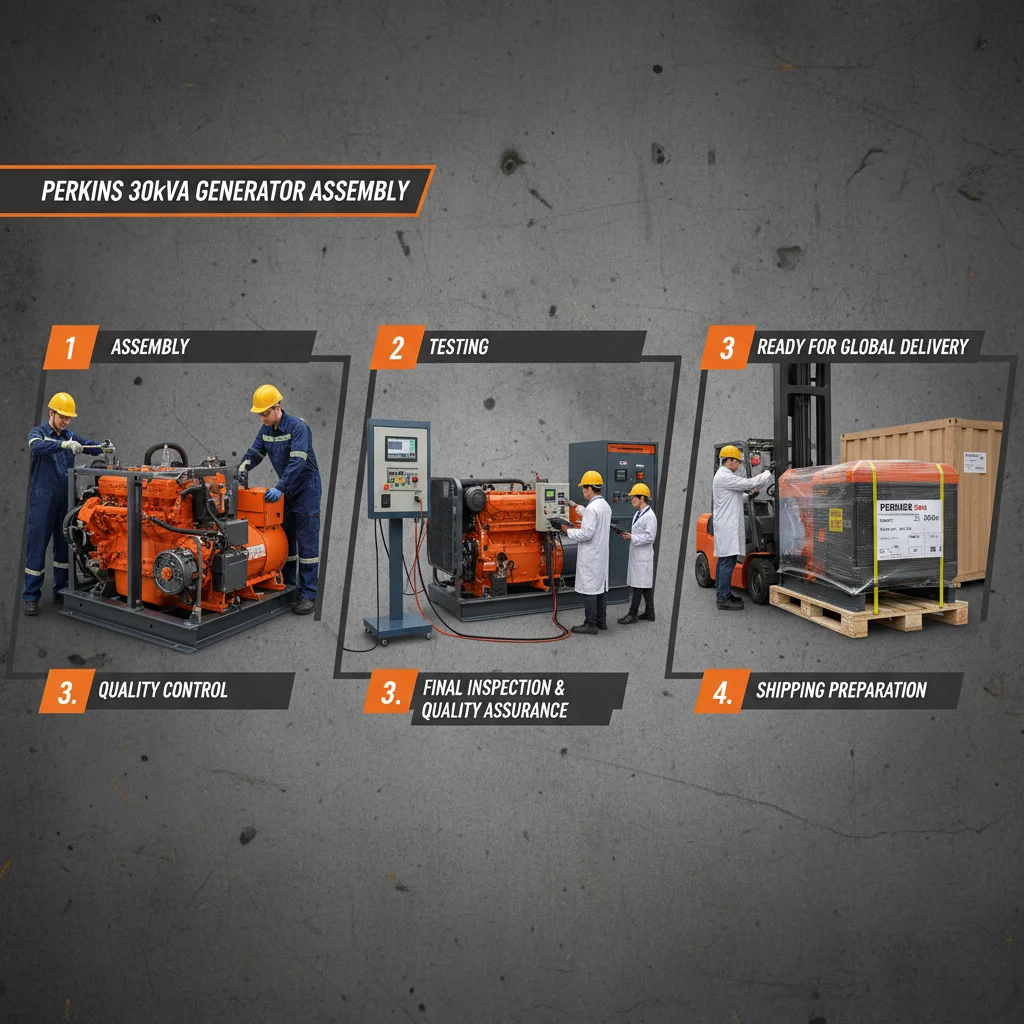
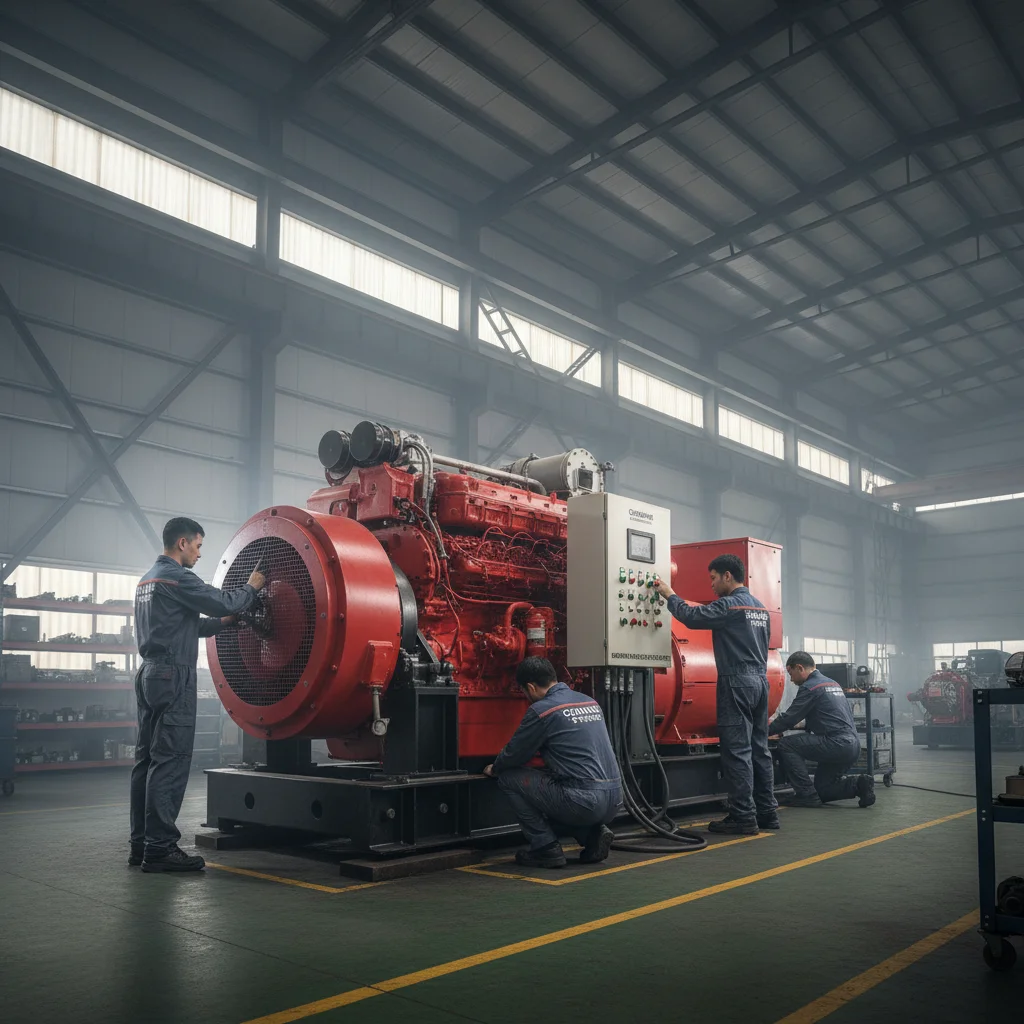
A perkins diesel generator Factory is essentially a high-precision engineering center that combines mechanical power with electronic intelligence. Unlike basic assembly lines, a modern factory integrates standardized modular designs with highly customized solutions to meet specific client needs, such as silent container power stations for urban data centers or heavy-duty anti-dust sets for construction sites.
These facilities focus on the synergy between the diesel engine, the alternator, and the control system. By adhering to international quality standards and compliance certifications, the factory ensures that every unit—whether it's a 20 kVA portable set or a 2500 kVA industrial powerhouse—provides consistent voltage and frequency, which is vital for protecting sensitive electronic components.
Furthermore, the modern manufacturing standard emphasizes "intelligent control." This means incorporating digital panels and Automatic Mains Failure (AMF) systems that allow for seamless power transfer during outages, reducing human error and ensuring that critical loads are powered within seconds of a grid failure.
At the heart of every unit produced by a perkins diesel generator Factory is the diesel engine. These engines are selected for their exceptional reliability and quick start-up capabilities, ensuring that backup power is available the instant it is needed, which is a non-negotiable requirement for critical backup power supplies.
The cooling and filtration systems are equally vital. For units destined for desert environments, the factory integrates high-capacity cooling systems and efficient air filters to combat extreme temperatures and sandstorms, ensuring that the engine does not overheat and that internal components remain free of abrasive debris.
Finally, the integration of soundproof containers and remote monitoring systems transforms a simple engine into a comprehensive power station. These additions allow a perkins diesel generator Factory to provide solutions that comply with strict urban noise regulations while allowing technicians to perform predictive maintenance from thousands of miles away via cloud-based diagnostics.
Evaluating the output of a perkins diesel generator Factory requires a deep dive into fuel economy and load distribution. Advanced engine technology and intelligent parallel operation solutions allow multiple units to share the load, which significantly lowers the operational cost per kilowatt-hour and extends the service life of the equipment.
The efficiency of these systems is measured not just by fuel consumption, but by the "stability of output" under varying loads. Whether powering a small agricultural pump or a massive seawater desalination plant, the ability to maintain a steady frequency prevents equipment wear and ensures the longevity of the connected machinery.
The true value of investing in equipment from a reputable perkins diesel generator Factory lies in the reduction of Total Cost of Ownership (TCO). While the initial purchase is an investment, the long-term savings are found in fuel efficiency, reduced downtime through predictive maintenance, and the extreme durability of heavy-duty components.
Reliability is not just a technical spec—it is a promise of safety and dignity. In healthcare settings or water treatment facilities, a generator failure isn't just a financial loss; it is a critical risk. By utilizing world-class alternators and engines, these factories ensure that the transition from grid to backup is invisible and instantaneous.
Furthermore, the availability of mobile repair services and comprehensive diagnostic tools ensures that even when a fault occurs, the downtime is minimized. The ability to perform on-site repairs for fuel injectors or voltage regulators prevents the logistical nightmare of transporting multi-ton equipment back to a workshop.
The future of the perkins diesel generator Factory is moving toward the "Hybrid Energy System." Recognizing the high cost of fuel transportation to remote islands or resorts, factories are now integrating diesel generators with solar photovoltaic systems. In this microgrid model, the generator handles peak loads and night-time power, while solar handles the base load, drastically reducing emissions.
Digital transformation is also redefining maintenance. We are seeing a shift from reactive repair to "Predictive Maintenance," where AI-driven sensors monitor vibration and temperature in real-time, alerting operators to a potential failure before it happens. This ensures that critical backup systems are always in a state of readiness.
Sustainability is no longer an afterthought. New emissions-compliant engines are being developed to meet stricter international environmental regulations without sacrificing the raw power required for industrial applications, ensuring that diesel power remains a viable and responsible choice for decades to come.
| Application Scenario | Recommended Solution | Key Technical Priority | Expected Reliability Score |
|---|---|---|---|
| Urban Data Centers | Silent Container Station | Noise Control & Stability | 10/10 |
| Desert Construction | Heavy-Duty Anti-Dust Set | Heat & Dust Resistance | 9/10 |
| Island Resorts | Solar-Diesel Hybrid Grid | Fuel Economy & Ecology | 8/10 |
| Rural Aquaculture | Economical Durable Set | Ease of Maintenance | 8/10 |
| Emergency Relief | Portable Diesel Unit | Rapid Deployment | 9/10 |
| Mining Operations | Industrial Parallel System | High Capacity & Load Share | 9/10 |
A professional factory typically specializes in 4-cylinder, 6-cylinder, and 12-cylinder diesel engines and complete diesel gensets. These are engineered for a wide range of applications, including industrial water pumps, agricultural machinery, marine engineering, and vehicle-special machinery, providing power solutions from 20 kVA up to 2500 kVA.
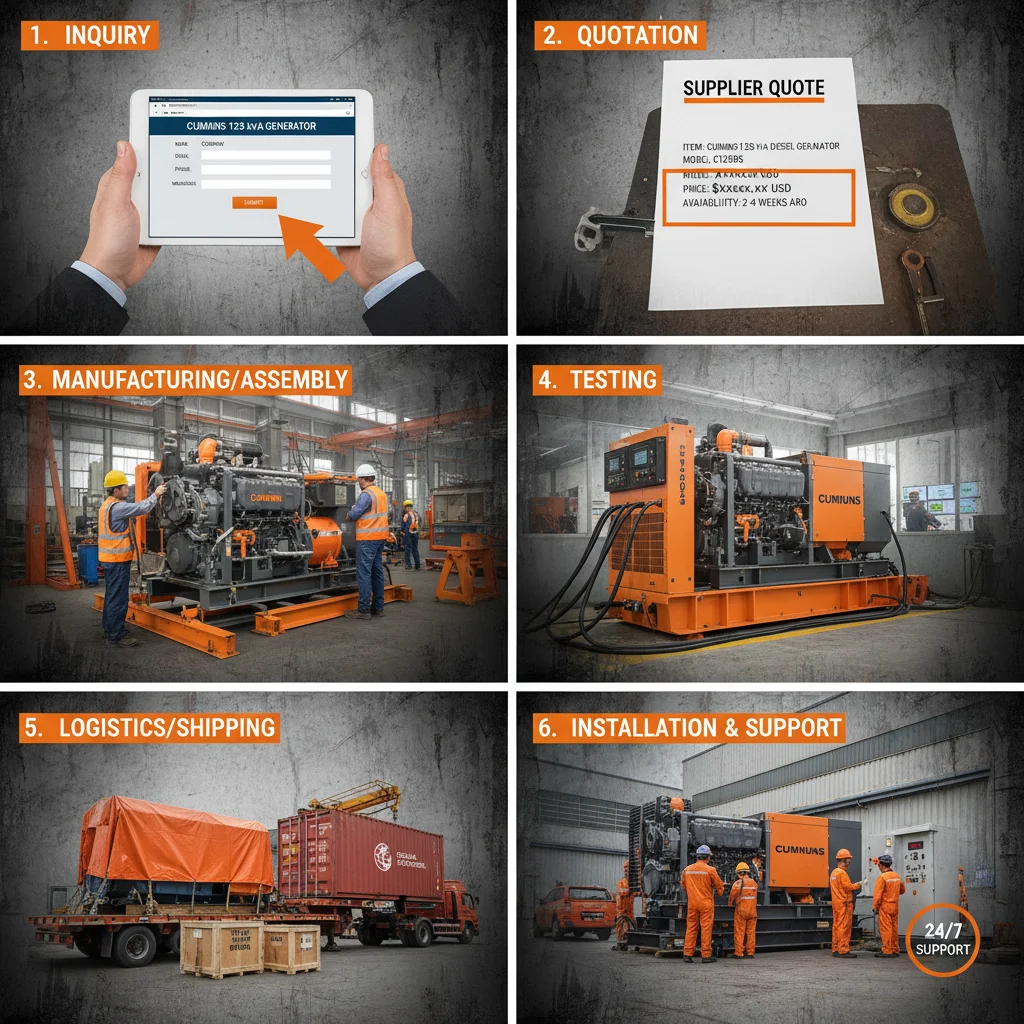
For standard sizes, most factories maintain sufficient stock for immediate delivery. For customized specifications, production can typically be arranged within 7-10 days. Depending on the destination port and order size (e.g., under 100 units), the total shipping and delivery time generally ranges from 20 to 60 days.
Common issues include starting failure (often caused by weak batteries or clogged filters), overheating (due to low coolant or blocked radiators), and voltage instability (related to faulty AVRs). These are resolved through regular battery checks, cleaning cooling systems, and professional calibration of the Automatic Voltage Regulator.
Technicians use a systematic approach starting with visual inspections for leaks or loose wiring, followed by reviewing digital fault codes on the control panel. They then employ specialized tools like multimeters, load testers, and diagnostic scanners to check fuel pressure, insulation resistance, and alternator performance under real working conditions.
Yes, modern factories are increasingly implementing hybrid energy systems. By combining diesel generators with solar photovoltaic arrays, users can create an isolated microgrid. The generator acts as a backup or peak-load provider, which significantly reduces diesel consumption and operational costs in remote areas like island resorts.
Standard safety protections include built-in defenses against overload, short-circuiting, low oil pressure, and high coolant temperature. These systems automatically shut down the engine to prevent permanent damage, ensuring that the equipment remains durable and safe for operators in demanding industrial environments.

CONTACT US
If you are interested in our products, you can choose to leave your information here, and we will be in touch with you shortly.